Spring 2025 Wisconsin Statewide General Election Results – Highlights
Supreme Court Race
Dane County Judge Susan Crawford prevailed decisively over Waukesha County Judge and former Wisconsin Attorney General Brad Schimel. With 99% of votes counted, the results for this non-partisan race are as follows:
- Susan Crawford: 55.0%
- Brad Schimel: 45.0%
Key Points in this Race
- The statewide voter turnout in this particular race is around 50% of the state’s voting age population, which is a record. The previous record for statewide turnout during a spring state Supreme Court race was in 2023, when 39% of Wisconsin’s voting age residents turned out to vote.
- Crawford’s win will maintain the 4-3 liberal majority on the court, which began after Justice Janet Protasiewicz won her state Supreme Court race in the spring of 2023. Crawford will begin her term on the court on August 1, 2025, and serves a 10-year term.
- Over $104 million was estimated to be spent by both campaigns and allied groups in this race – which has turned out to be the most expensive state Supreme Court election in our nation’s history.
- This race featured a high level of spending from very wealthy individuals in support of each candidate, including Elon Musk in support of Schimel and Democratic Illinois Governor J.B. Pritzker in support of Crawford.
- President Donald Trump endorsed Schimel in this race.
- This race was generally viewed on the national level as a litmus test on Donald Trump’s second term as President.
State Superintendent of Schools Race
Incumbent Jill Underly prevailed over educational consultant Brittany Kinser in a race that did not get the same level of attention as the state Supreme Court race. With 99% of votes counted, the results for this non-partisan race are as follows:
- Jill Underly: 52.9%
- Brittany Kinser: 47.1%
Key Points in this Race
- While this race is also technically non-partisan, the state Democratic party endorsed Underly, and the state Republican party endorsed Kinser. Both state party organizations contributed a significant amount of funding to each respective campaign.
- Historically, the candidate with the endorsement of the state’s teachers’ union has won this race. In this race, the union endorsed Underly.
- In this race, Underly faced some controversy when she changed the state’s K-12 testing standards. Kinser also faced controversy, as she let her state educator’s license lapse.
Statewide Constitutional Referendum
There was also one statewide referendum question on the April 1 ballot intended to amend the state constitution with respect to voter identification. The following language was included on the April 1 ballot:
“Shall section 1m of article III of the constitution be created to require that voters present valid photographic identification verifying their identity in order to vote in any election, subject to exceptions which may be established by law?"
With 99% of votes counted, the results for this referendum are as follows:
Key Points on this Referendum
- Currently, state law requires voters to present photo identification when voting. However, Legislators who proposed this referendum championed this effort due to concerns that either the state Supreme Court could overturn this law or that it could be rescinded during a future legislative session with a Democratic majority.
- Proponents of this constitutional amendment argue that voter identification should be required to increase confidence in elections and guard against fraud.
- Opponents of this constitutional amendment argue that this will make it harder for Wisconsinites without photo identification to vote, including elderly individuals and those who are disabled.
Governor Evers Signs Bill Extending the electronic Prescription Drug Monitoring Program (ePDMP)
On March 28, Governor Tony Evers signed Senate Bill 68 into law, which extends the electronic Prescription Drug Monitoring Program (ePDMP). This program helps combat substance misuse. In particular, this law extends the requirement for prescribers to undertake an ePDMP review prior to providing a prescription to a patient until April 1, 2030. This new law is 2025 Wisconsin Act 5.
WAFP Takes Positions on Legislation
Recently, WAFP decided to take positions on the following legislation:
- Support – Draft legislation not yet introduced that regulates pharmacy benefit managers and applies prescription drug payments to health insurance cost-sharing requirements.
- More specifically, this bill includes a number of provisions to protect patients’ access to pharmacies and medications, including:
- Ensures pharmacies are allowed to join preferred or non-preferred networks.
- Prevents pharmacy benefit managers from reimbursing pharmacies below the cost of the prescription.
- Mandates that prescription drug co-pay coupons that help pay for patients’ medications are allocated towards their deductibles.
- WAFP supported similar legislation that was introduced during the 2023-2024 Legislative Session.
- Oppose – Assembly Bill 104 and Senate Bill 157 – Prohibits gender transition medical intervention for those under 18 years of age.
- WAFP supported similar legislation that was introduced during the 2023-2024 Legislative Session.
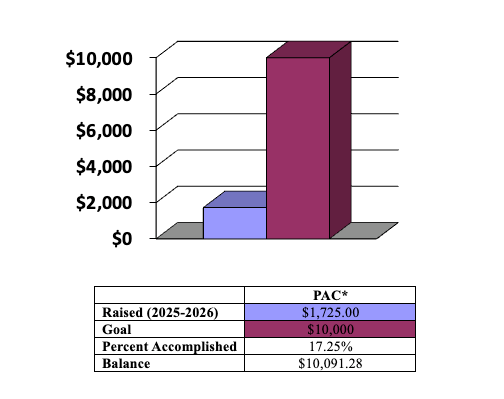
Help Support Family Medicine and Your Patients – Please Consider Contributing to the WiFamMedPAC!
It is imperative for WAFP members to get involved in the political process to stand up for your patients and profession. An excellent way to do that is through campaign contributions.
As you may know, WiFamMedPAC is WAFP’s political giving program that allows members to engage in the political process and advocate for effective healthcare and workforce policy that protects the health and safety of patients and supports family physicians.
Through WiFamMedPAC, the Academy collects voluntary contributions from members into a single account and distributes them – under the direction of the PAC board – to candidates for elective state office who share WAFP’s policy goals and vision for health care in Wisconsin. By contributing to WiFamMedPAC, your political contributions are responsibly distributed within the parameters of state campaign finance laws.
Contributing to WiFamMedPAC is quick and easy. Simply visit the WiFamMedPAC contribution website and make a secure online contribution, or feel free to contact the Academy office at (262) 512-0606. It will take less than five minutes of your time.
Thank you to those who have made contributions to the WiFamMedPAC in 2025-2026!
Dr. Beth Menzel Dr. Steve Bartz
Dr. Jean Riquelme Dr. Jahanvi Kothari
Dr. Sabrina Hofmeister Dr. Kirsta Hoffman
Dr. Tom Joles Dr. Rich Roberts
Dr. Ken Schellhase Ms. Becky Wimmer
The WiFamMedPAC data below is up to date through April 8, 2025.